About Symposium

al-baraka-symposium-logo

Al Baraka Symposium:

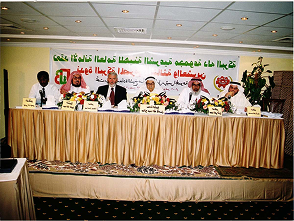
AlBraka Islamic Economics Symposium is one of the most important and renowned initiatives of AlBaraka Forum for Islamic Economy. It was established in 1981, embarking on a long-standing journey of intellectual contribution aimed at serving and enriching the knowledge infrastructure of Islamic economics.

about-1

Since its inception, the Symposium has served as a scholarly and economic forum, representing a cornerstone in the development of Islamic economic practice from both jurisprudential and technical perspectives. It has been held regularly during the holy month of Ramadan each year, during which a range of contemporary economic issues, or issues with economic dimensions, are presented for discussion and deliberation from both Shariah and technical viewpoints. These discussions are conducted by a distinguished group of leading scholars and jurists of regional and international repute, alongside experts in finance, business, economics, and Islamic finance. The ultimate objective is to arrive at fatwas and recommendations that enrich Islamic economic practice across its various fields and offer effective solutions to the challenges it faces.

reg-4

Desired goals:

1

Seeking appropriate solutions to economic problems, derived from the two sources of revelation and objectives (maqasid) of Sharia, while encouraging scientific research in Islamic economics.

2

To promote a comprehensive understanding of Islamic economics that contributes to sustainable growth and employment within human societies.

3

To establish sound Islamic jurisprudential foundations for contemporary life in its economic dimension.

4

To provide an authoritative scientific reference for academic research, the work of Shariah boards and committees, and the issuance of fatwas.

5

To contribute to the development of ethical financial products that meet both technical and Shariah requirements.

Sheikh Saleh Abdullah Kamel

AlBaraka Symposium was founded, nurtured, and personally overseen for forty years by the renowned businessman Sheikh Saleh Abdullah Kamel (1941–2020), May Allah bestow His Mercy on him. He was one of the foremost pioneers of Islamic economics, indeed the only pioneer whose interests encompassed all fields of Islamic economics, with particular emphasis on knowledge development and innovation.

Over more than four decades, the fatwas and recommendations issued by AlBraka Islamic Economics Symposium have become a fundamental scholarly reference and a rich knowledge base that supports academic research and informs fatwas issued by Shariah boards of Islamic banks and financial institutions, as well as by fiqh academies and various organizations worldwide. Many decisions and recommendations of Shariah boards, fiqh academies, and institutions across the globe rely on this substantial body of fatwas, recommendations, and research produced by the Symposium.

Sheikh Saleh Kamel's Contributions to Islamic Economics and the Al-Baraka Symposium:

  • The Al Baraka Symposium was launched as an annual scientific platform bringing together jurists, experts, and bankers from across the Islamic world.
  • The symposium aims to discuss emerging issues in Islamic economics and provide scientific recommendations that contribute to the development of Islamic financial performance.
  • It has been running for more than four decades, discussed hundreds of scientific papers, and issued recommendations that have become a reference for Islamic financial institutions.
1 - Establishment of the Al-Baraka Symposium on Islamic Economics (1983 AD)
  • He established one of the first and largest Islamic investment groups.
  • He contributed to spreading the practical concept of Islamic finance through Sharia-compliant banking and commercial services.
2 - Establishment of Dallah Al Baraka Group
  • He funded and supervised the publication of numerous books and studies specializing in financial jurisprudence.
  • He encouraged partnerships between universities and research centers to advance Islamic financial education.
3 - Continuous support for scientific research and conferences
  • He was an influential voice in international forums on Islamic finance, advocating for transparency and professionalism while adhering to Sharia guidelines.
  • He supported the establishment of Sharia oversight institutions, such as fatwa and Sharia supervisory boards in banks.
4 - Global impact
  • He believed that Islamic economics was not merely a technical alternative, but rather an integrated civilizational project that linked finance and morality.
  • He sought to present Islamic economics as a means of achieving justice and sustainable development.
5 - Linking the economy and Islamic values

“Sheikh Saleh Kamel was not just a businessman. He was a thought leader who carried the message of Islamic economics with the spirit of a reformer and a visionary. He established institutions, launched initiatives, and left an indelible mark on the field.”